

The kitchen has become one of the most important spaces in the modern home. In 2026, kitchen design goes far beyond cooking, evolving into a central hub for daily life, social interaction, and family connection. Modern kitchens are expected to balance performance with aesthetics, offering seamless functionality while maintaining a refined and welcoming atmosphere.
If you’re looking for more ideas, explore our complete guide on Kitchen & Bathroom Ideas.
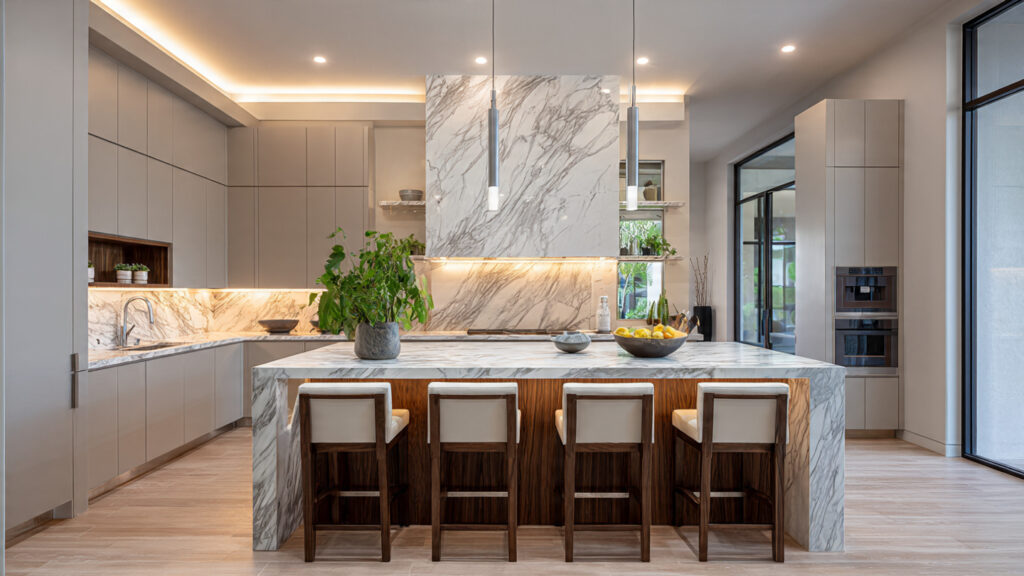
Rather than focusing on short-lived trends, kitchen design ideas for 2026 emphasize timeless materials, thoughtful layouts, and adaptable solutions. The result is a kitchen that feels modern today and remains relevant for years to come. Whether designing a compact apartment kitchen or a spacious open-plan layout, the principles shaping 2026 kitchens prioritize efficiency, comfort, and understated luxury.
Design Philosophy for Kitchens in 2026
The core philosophy of kitchen design in 2026 is intentional simplicity. Clean lines, uncluttered surfaces, and cohesive color schemes define modern kitchens, but warmth is carefully integrated to prevent the space from feeling sterile. Designers focus on balance—combining minimalism with comfort and visual softness.
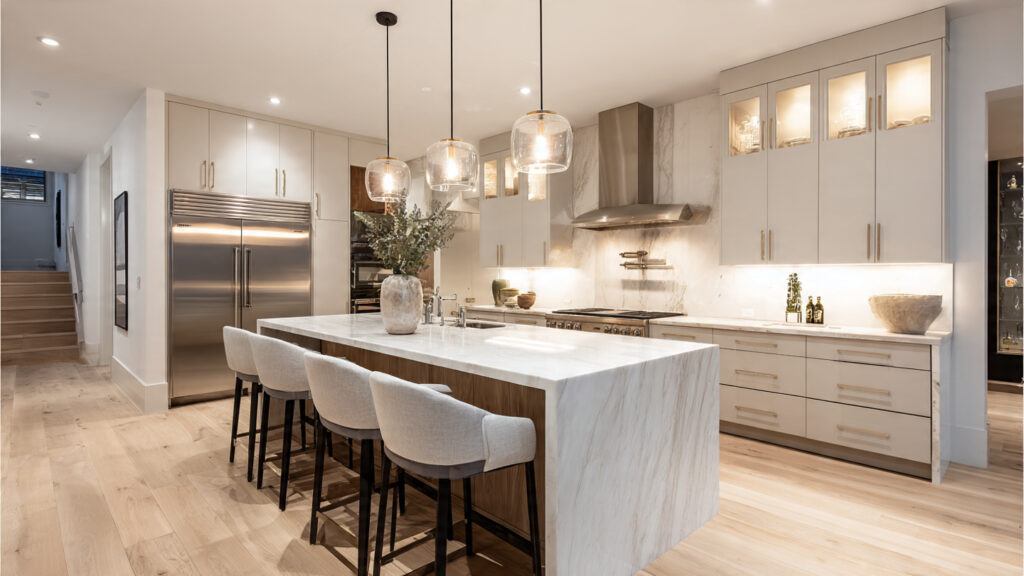
Functionality remains paramount. Every design choice, from cabinetry layout to appliance placement, is made with daily usability in mind. Kitchens are designed to support multiple activities, including cooking, dining, working, and entertaining, without compromising flow or organization.
Layout Planning and Kitchen Flow
Effective layout planning is the foundation of a successful kitchen. In 2026, kitchens are planned around efficiency and movement, ensuring that essential zones work together seamlessly. The relationship between cooking, cleaning, and storage areas is carefully considered to minimize unnecessary steps and visual clutter.
Open-plan kitchens continue to dominate modern homes, allowing the kitchen to connect naturally with dining and living areas. In these layouts, kitchen islands play a key role. They provide additional workspace, storage, and seating while acting as a visual anchor within the space. Even in smaller kitchens, compact islands or peninsula layouts are used to enhance functionality without overwhelming the room.
Color Trends Shaping 2026 Kitchens
Color palettes for kitchens in 2026 lean toward calm, neutral tones that create a timeless foundation. Shades such as warm white, soft beige, greige, and muted gray are widely used for cabinetry and walls. These colors reflect light effectively, making kitchens feel open and inviting.
You can also explore Transform Your Kitchen: Modern Interior Design Ideas for Every Home.
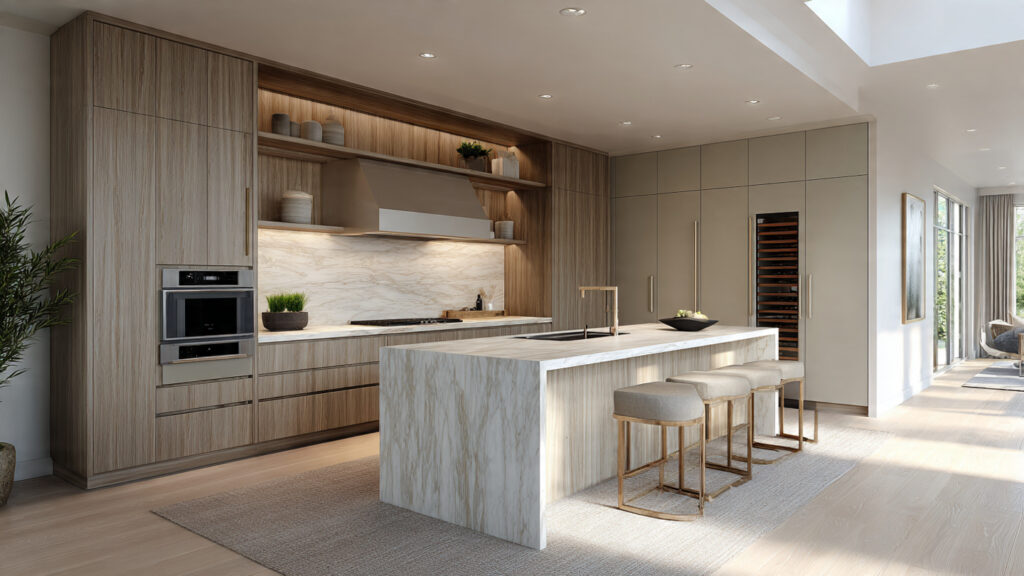
To add depth, designers introduce accent tones inspired by nature. Olive green, charcoal, clay, and deep blue appear subtly through lower cabinets, backsplashes, or island units. Rather than bold contrasts, these accents are layered thoughtfully to maintain visual harmony.
Cabinetry and Storage Solutions
Cabinet design in 2026 kitchens emphasizes clean surfaces and integrated storage. Handleless cabinetry, push-to-open systems, and recessed pulls contribute to a streamlined appearance. Cabinet finishes are predominantly matte, offering a soft and contemporary look that resists fingerprints and wear.
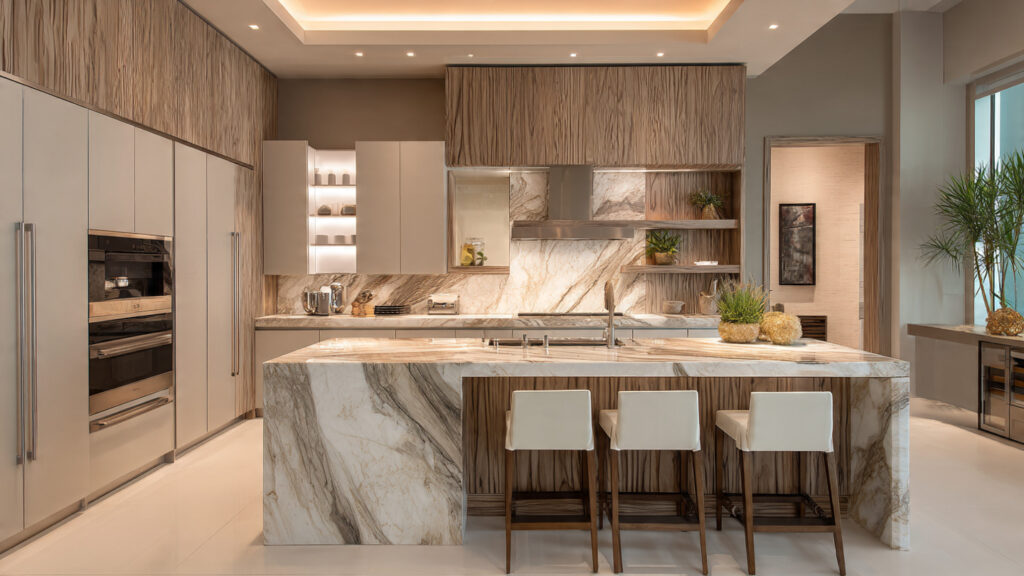
Storage solutions are highly optimized. Tall pantry units, concealed drawers, corner storage systems, and built-in organizers help maintain order and efficiency. The focus is on maximizing usable space while keeping countertops free of clutter, reinforcing the kitchen’s clean aesthetic.
Materials and Finishes
Material selection plays a defining role in kitchen design ideas for 2026. Natural and tactile materials are favored for their warmth and durability. Wood finishes, stone-inspired countertops, textured laminates, and ceramic surfaces are commonly used to elevate both appearance and performance.
Countertops often feature quartz, porcelain, or engineered stone for their durability and low maintenance. Backsplashes are designed to complement rather than dominate, using subtle textures or large-format tiles that enhance continuity.
Lighting Design for Modern Kitchens
Lighting is an essential design element in 2026 kitchens. Rather than relying solely on ceiling fixtures, modern kitchens use layered lighting strategies to enhance both function and ambiance. Ambient lighting provides general illumination, while task lighting supports food preparation and cooking activities.

Pendant lights above islands and dining areas add visual interest and define zones within open-plan layouts. Under-cabinet lighting highlights work surfaces and contributes to a warm, inviting atmosphere. Lighting temperatures are carefully selected to balance clarity with comfort.

Appliances and Technology Integration
Appliances in 2026 kitchens are designed to integrate seamlessly into the overall aesthetic. Built-in ovens, concealed refrigerators, and integrated dishwashers maintain visual continuity and reduce clutter. Technology enhances efficiency without drawing attention to itself.
Smart appliances, touch-control systems, and energy-efficient features are increasingly common. However, the emphasis remains on subtle integration, ensuring technology supports functionality while preserving the kitchen’s clean design language.
Kitchen Islands as Multifunctional Centers
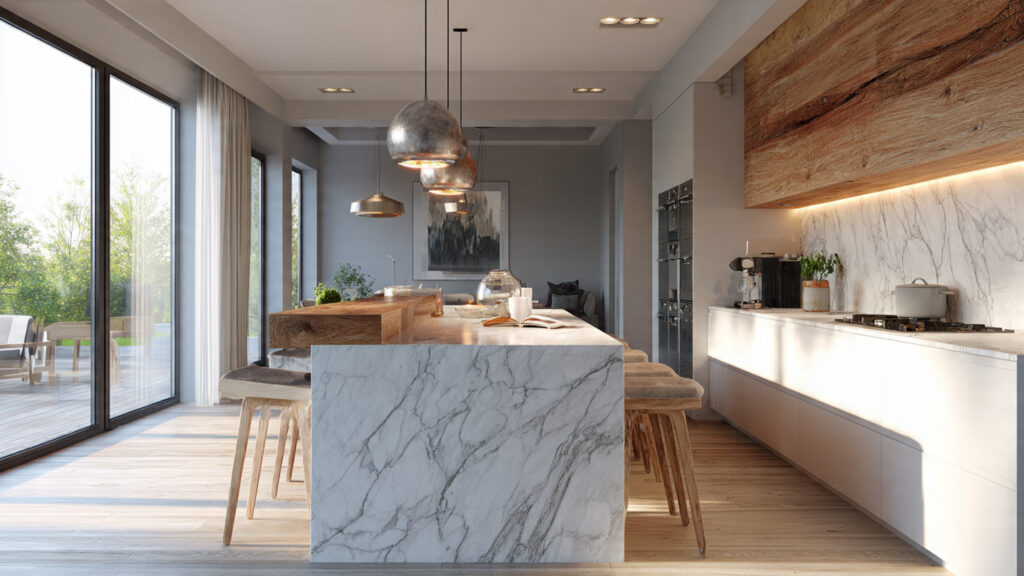
Kitchen islands continue to be a defining feature in modern kitchens. In 2026, islands are designed to serve multiple purposes, including food preparation, dining, storage, and social interaction. Their design often contrasts slightly with surrounding cabinetry to create a focal point.
Islands may feature waterfall countertops, integrated seating, or open shelving to add character and functionality. Proportions are carefully considered to ensure the island enhances flow rather than obstructing movement.
Open Shelving and Display Elements
While closed storage dominates 2026 kitchens, open shelving is used selectively to add personality and visual interest. Shelves are often styled minimally, displaying ceramics, glassware, or curated décor items that complement the kitchen’s color palette.
The key to successful open shelving lies in restraint. A few well-chosen items maintain a clean appearance while allowing homeowners to express personal style.
Creating a Warm and Inviting Atmosphere
Despite their modern aesthetics, kitchens in 2026 prioritize warmth and comfort. This is achieved through layered textures, natural materials, and thoughtful lighting. Wood accents, soft color transitions, and subtle décor elements help balance sleek surfaces.
Seating areas are designed for comfort, encouraging the kitchen to function as a social space. Whether through bar stools at an island or a casual dining nook, the kitchen becomes a place to gather and connect.
Timeless Design and Longevity
A defining characteristic of 2026 kitchen design is its focus on longevity. Neutral foundations, quality materials, and adaptable layouts ensure kitchens remain stylish and functional over time. Trend-driven elements are introduced sparingly, making future updates simple and cost-effective.
A well-designed kitchen feels effortless, supporting daily routines while maintaining a refined visual presence.
Conclusion
Kitchen design ideas for 2026 reflect a thoughtful balance between modern functionality and timeless elegance. By combining smart layouts, calming color palettes, refined materials, and integrated technology, contemporary kitchens become efficient, welcoming, and enduring spaces. Whether renovating or designing from scratch, these ideas provide a clear framework for creating a kitchen that meets the demands of modern living while remaining visually sophisticated.
For more home inspiration, visit our homepage and For more tips like this, visit our Home Decor Hub and explore all our home decor guides.