
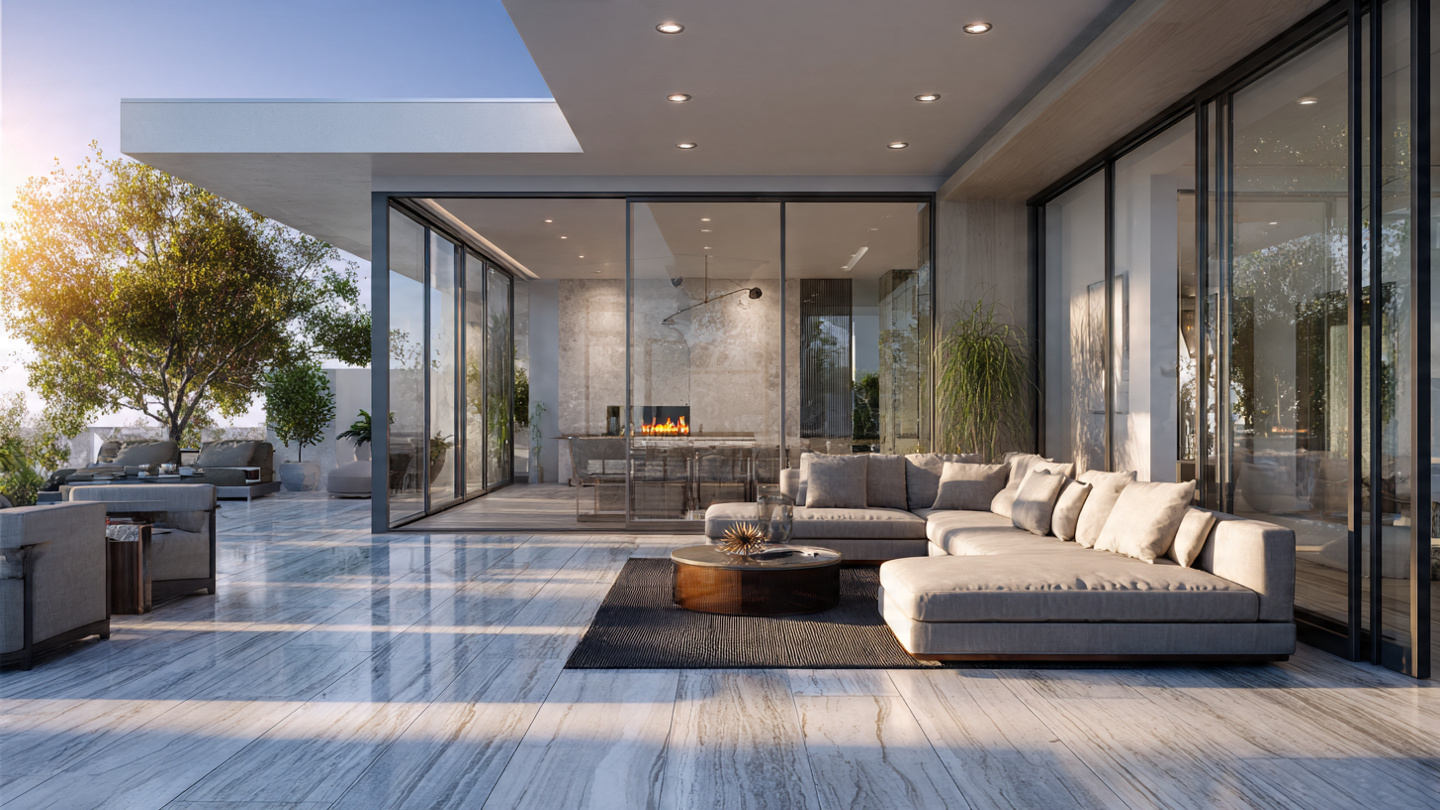
Outdoor living has become an essential part of modern home design. In 2026, outdoor spaces are no longer treated as secondary areas but as fully integrated extensions of the interior. Patios, terraces, balconies, gardens, and rooftops are designed to support relaxation, social gatherings, dining, and even remote work. The emphasis is on comfort, durability, and visual harmony with the surrounding environment.
If you’re looking for more ideas, explore our complete guide on Interior & Exterior Design.
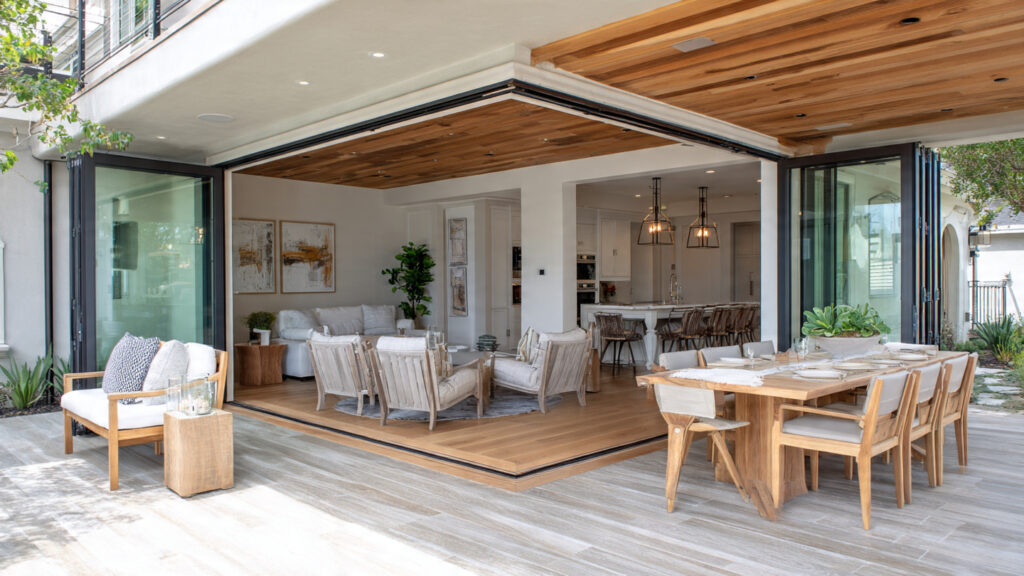
Rather than seasonal use, outdoor living areas are now planned for year-round functionality. Thoughtful layouts, weather-resistant materials, and flexible furniture solutions allow homeowners to enjoy outdoor spaces in various climates. Outdoor living ideas for 2026 reflect a growing desire to reconnect with nature while maintaining modern comfort and refined aesthetics.
The Design Philosophy of Outdoor Living in 2026
The core philosophy shaping outdoor living design in 2026 is seamless integration. Outdoor areas are designed to feel like natural extensions of indoor spaces, sharing similar color palettes, materials, and design language. This continuity creates a cohesive experience and enhances the overall flow of the home.
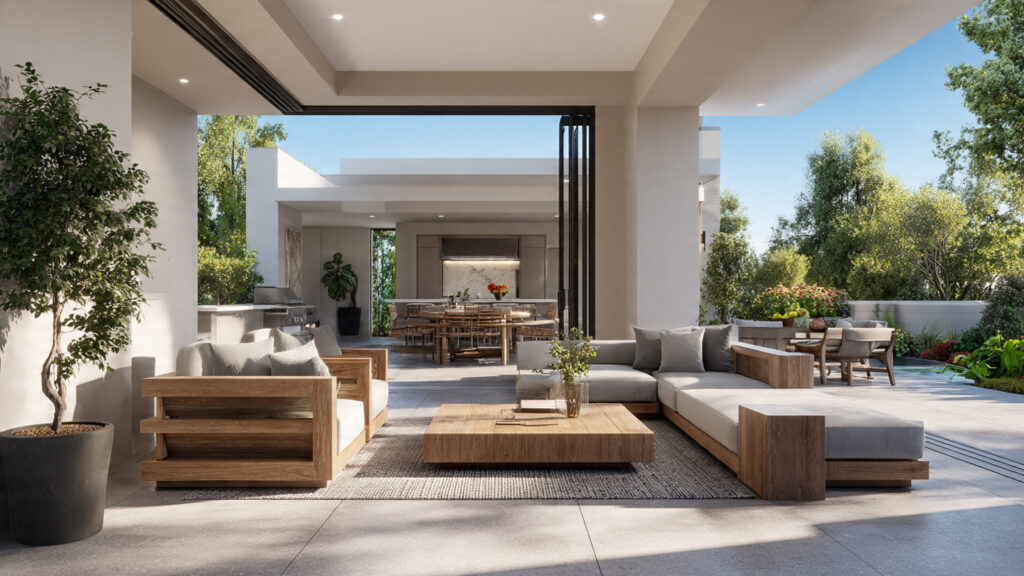
Minimalism with warmth defines modern outdoor spaces. Clean lines and uncluttered layouts are balanced with soft textures, natural finishes, and comfortable furnishings. The goal is to create environments that feel relaxed yet visually sophisticated.
Planning the Outdoor Layout
Effective layout planning is fundamental to successful outdoor living design. In 2026, outdoor spaces are zoned according to function. Separate areas for seating, dining, lounging, and cooking are clearly defined, even within compact spaces.
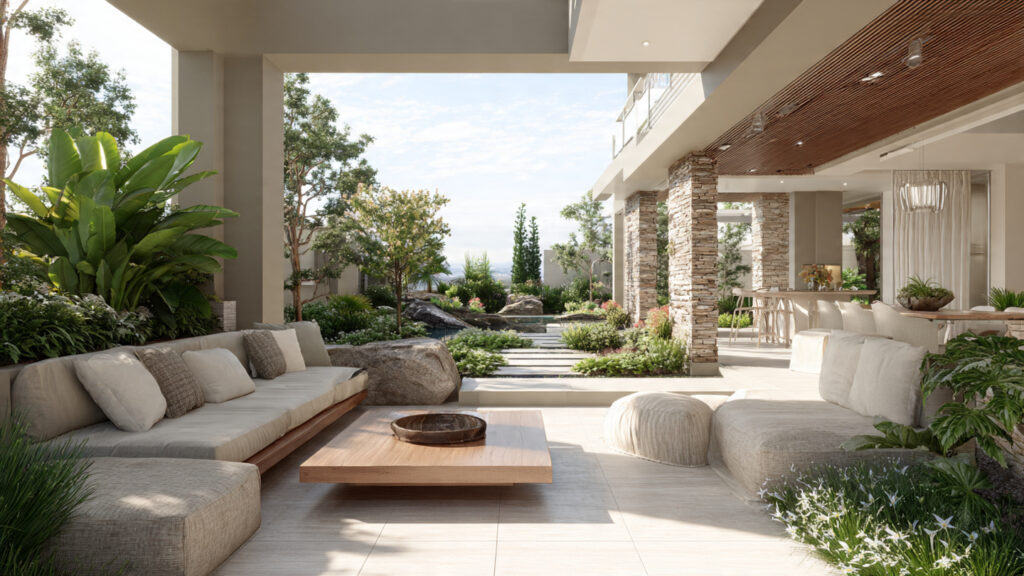
Furniture placement is intentional, ensuring ease of movement and comfort. In larger outdoor areas, sectioned layouts help create intimacy, while smaller patios or balconies benefit from multifunctional furniture that maximizes usability. The emphasis is on flow, allowing users to move effortlessly between zones.
You can also explore Luxury Jacuzzi Outdoor Ideas to Transform Your Backyard Retreat.
Indoor–Outdoor Connection
One of the strongest trends in outdoor living ideas for 2026 is the seamless connection between indoor and outdoor spaces. Large sliding or folding glass doors, level flooring transitions, and consistent materials help blur the boundary between inside and outside.
When outdoor areas visually align with interior design, they feel more inviting and usable. Neutral color palettes, natural textures, and complementary furniture styles reinforce this connection, creating a unified living environment.
Color Palettes and Natural Inspiration
Color schemes for outdoor living spaces in 2026 are inspired by nature. Earthy neutrals such as sand, stone, beige, taupe, and soft gray form the foundation. These colors blend effortlessly with outdoor surroundings while providing a timeless backdrop.
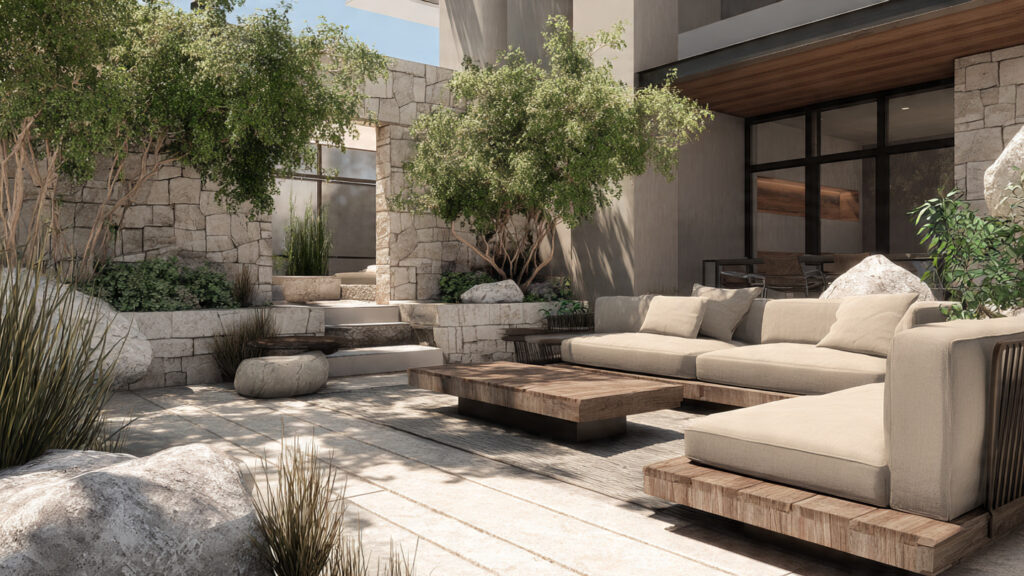
Accent colors appear in muted, organic tones such as olive green, terracotta, charcoal, or soft blue. These hues are introduced through cushions, planters, or décor accessories, adding depth without overwhelming the space.
Outdoor Furniture Trends
Comfort is a top priority in outdoor living design for 2026. Outdoor furniture now rivals indoor furniture in terms of comfort and aesthetics. Sofas, lounge chairs, and daybeds feature plush cushions, ergonomic forms, and refined silhouettes.
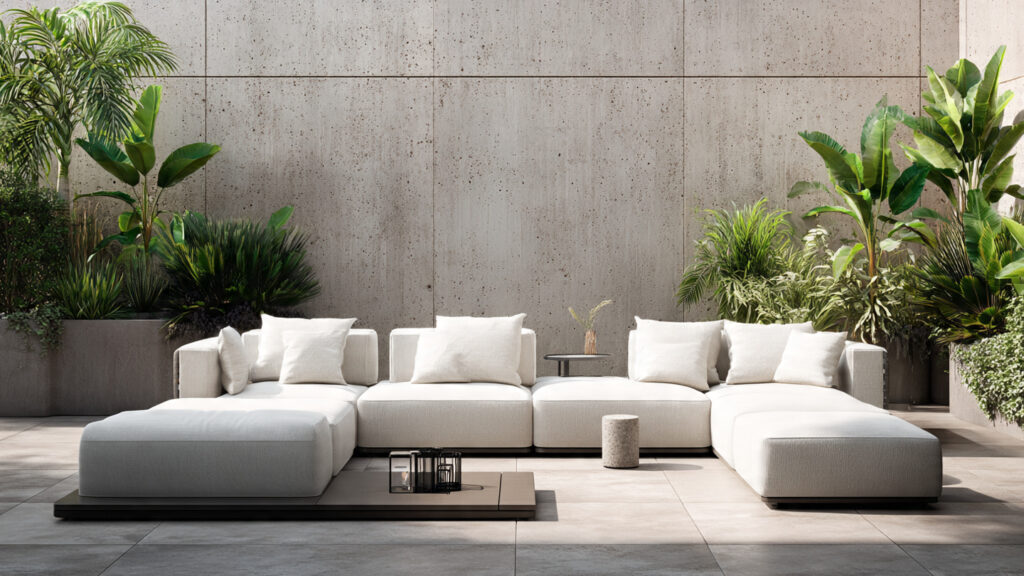
Materials are selected for durability and style. Powder-coated metals, treated wood, synthetic wicker, and weather-resistant fabrics ensure longevity while maintaining a modern appearance. Modular furniture systems are increasingly popular, offering flexibility for different occasions and layouts.
Dining and Entertainment Areas
Outdoor dining continues to be a central feature of modern outdoor living. Dining tables are designed for both everyday meals and social gatherings, often paired with comfortable seating and subtle lighting. Covered dining areas or pergolas provide shade and extend usability throughout the day.
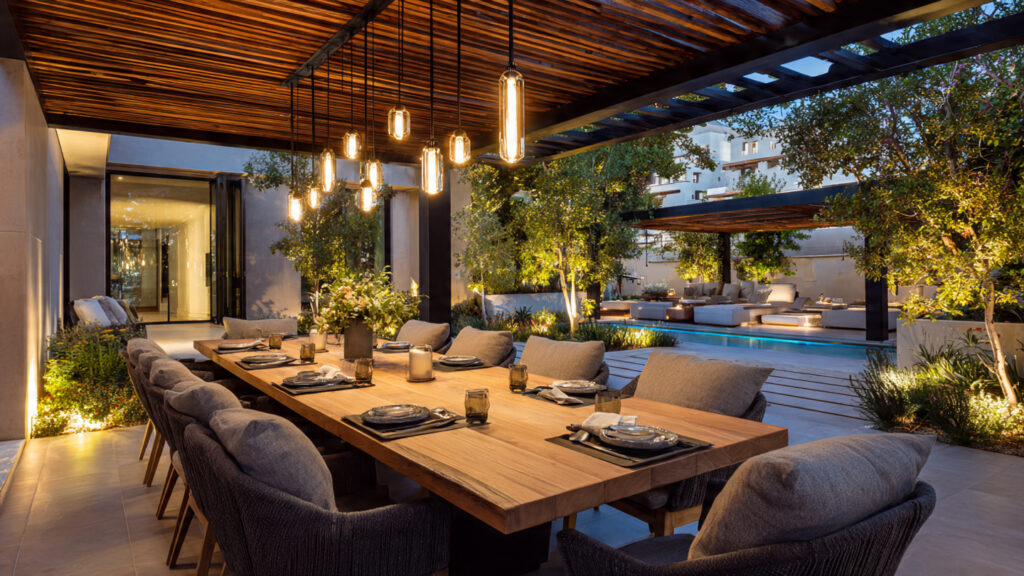
Outdoor entertainment spaces may also include lounge seating, fire features, or integrated audio systems. These elements transform the outdoor area into a social hub that supports relaxation and connection.
Shade Structures and Architectural Elements
Shade is essential for comfort in outdoor spaces. In 2026, shade solutions are both functional and architectural. Pergolas, canopies, retractable awnings, and covered patios define spaces while offering protection from sun and light rain.
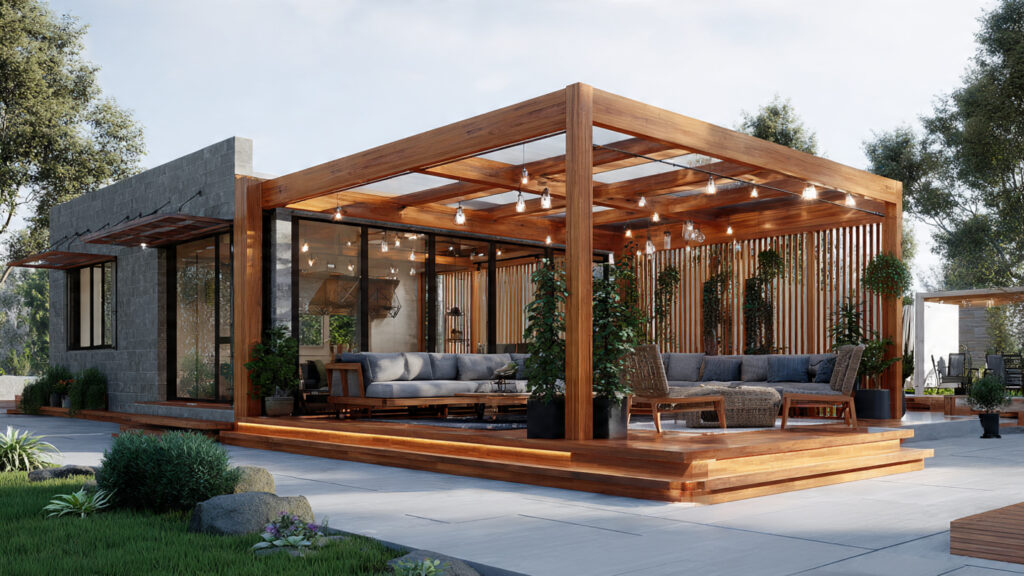
These structures often incorporate lighting or fabric panels to enhance usability and aesthetics. Their design aligns with the home’s architecture, reinforcing a cohesive overall look.
Lighting Design for Outdoor Ambiance
Lighting plays a critical role in shaping the atmosphere of outdoor living spaces. In 2026, layered lighting strategies are used to balance functionality and mood. Ambient lighting provides general illumination, while accent lighting highlights landscaping, pathways, or architectural features.
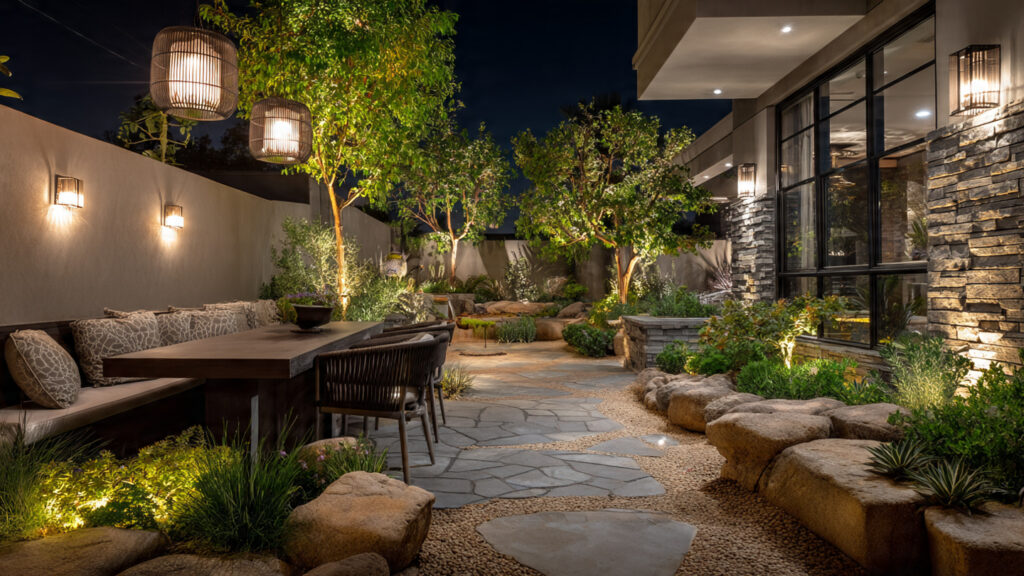
Warm lighting tones are preferred, creating a welcoming and intimate environment. String lights, wall-mounted fixtures, recessed floor lights, and lantern-style lamps are commonly used to enhance visual interest after sunset.
Landscaping and Green Elements
Landscaping is integral to outdoor living design. In 2026, greenery is used strategically to soften hard surfaces and create a sense of enclosure. Planters, vertical gardens, and integrated planting beds add texture and color while improving privacy.
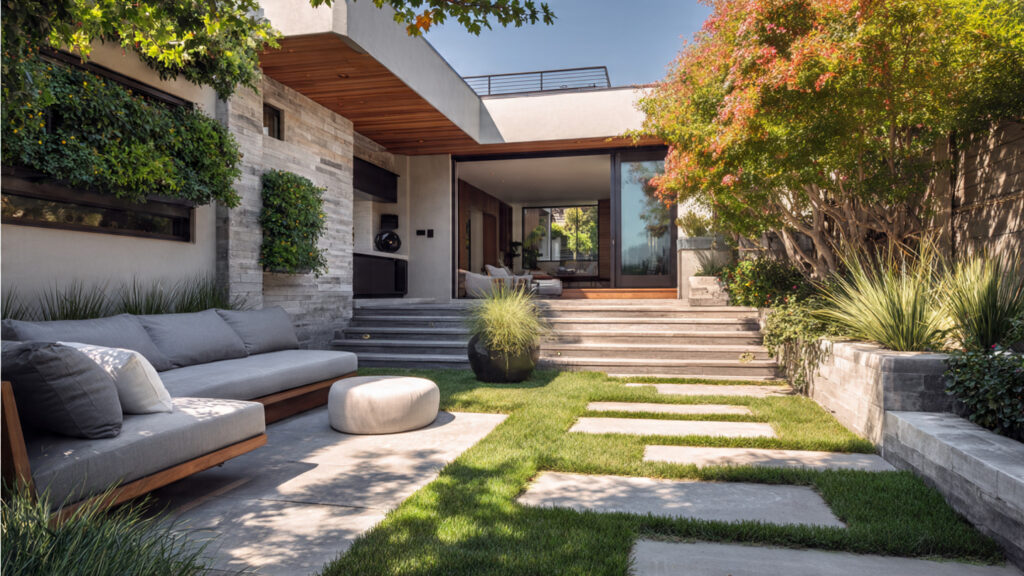
Low-maintenance plants are favored, reflecting a practical approach to outdoor design. The focus is on creating a natural, calming environment that complements the architectural elements of the space.
Textiles and Outdoor Décor
Textiles bring comfort and personality to outdoor living areas. Cushions, rugs, and throws designed for outdoor use add warmth and visual depth. In 2026, these elements are chosen in neutral or nature-inspired tones to maintain harmony.
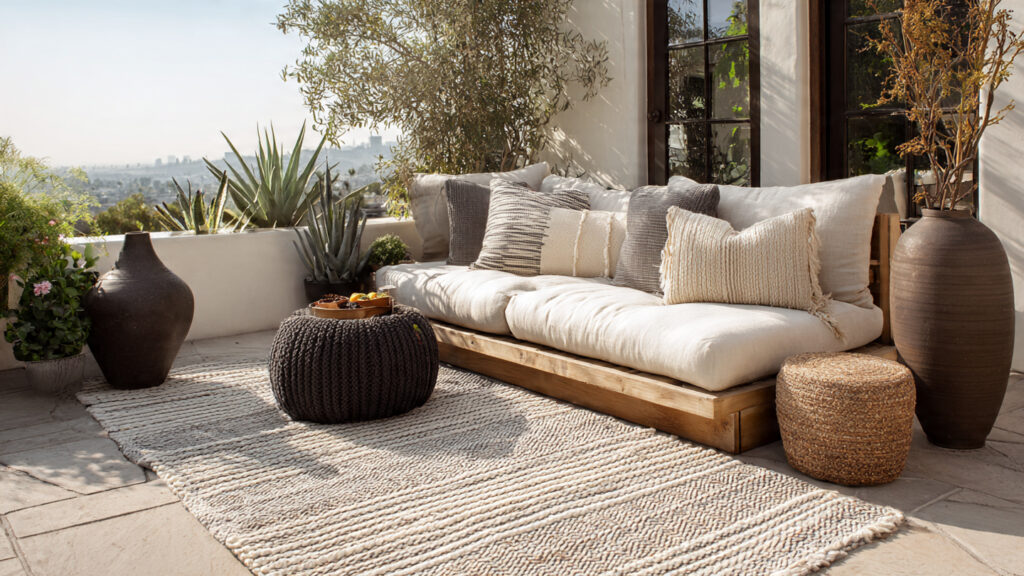
Outdoor décor is minimal and intentional. Decorative objects, planters, and lighting fixtures are selected for their form and material rather than excess ornamentation. This approach ensures the space remains elegant and uncluttered.
Technology and Smart Outdoor Living
Technology is increasingly integrated into outdoor living spaces. Weather-resistant speakers, smart lighting controls, and automated shade systems enhance convenience and comfort. These features are designed to remain discreet, preserving the natural and relaxed feel of the space.
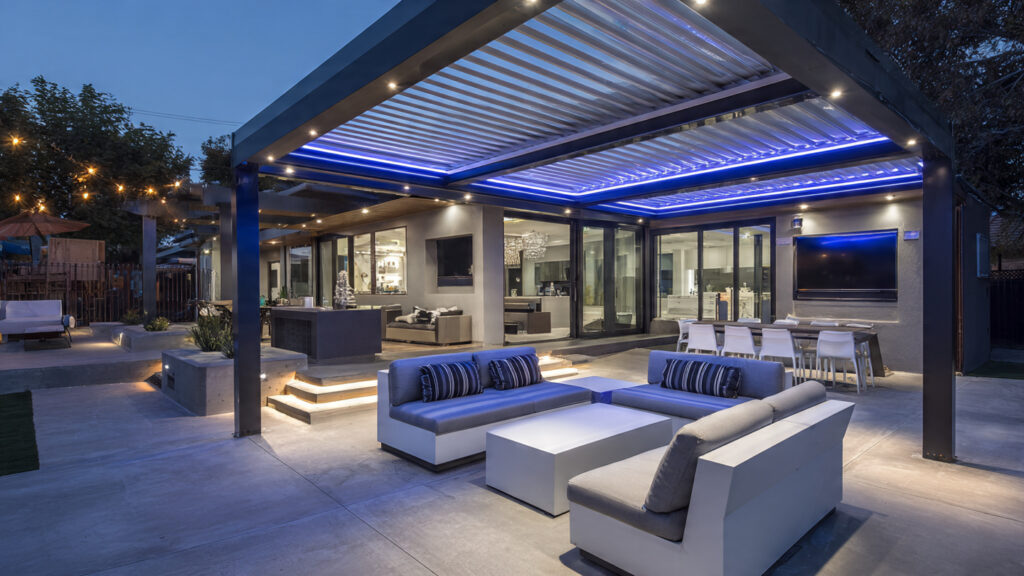
The emphasis is on enhancing usability without compromising aesthetics.
Creating Timeless Outdoor Living Spaces
While trends inform design inspiration, timelessness remains a priority. Neutral foundations, quality materials, and adaptable layouts ensure outdoor spaces remain relevant and functional over time. Seasonal updates can be achieved through textiles and accessories rather than structural changes.
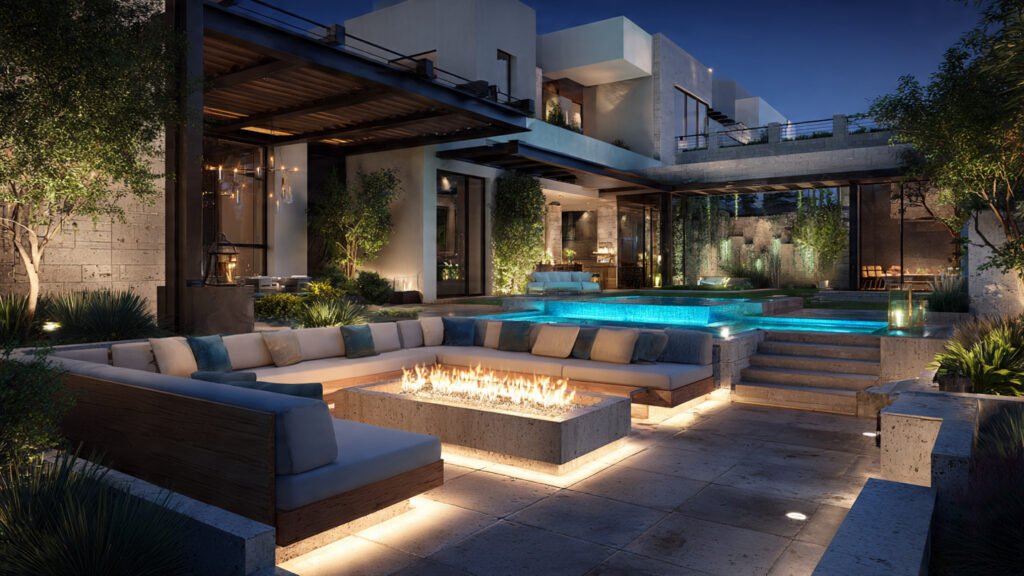
A well-designed outdoor living area feels effortless and inviting, supporting everyday relaxation and social interaction.
Conclusion
Outdoor living ideas for 2026 reflect a thoughtful balance between modern design, comfort, and connection to nature. By combining functional layouts, durable materials, comfortable furniture, and layered lighting, outdoor spaces become true extensions of the home. Whether designing a small balcony or a large backyard, these ideas provide a clear framework for creating outdoor living environments that are stylish, relaxing, and built to last.
For more home inspiration, visit our homepage and For more tips like this, visit our Home Decor Hub and explore all our home decor guides.