

A thoughtfully designed office interior is a critical factor in determining how efficiently employees work and how professionally a business is perceived. Modern office interior design is no longer limited to desks and chairs; it integrates layout planning, ergonomics, lighting, branding, and sustainability to create environments that support productivity and well-being. The following office interior design ideas explain how strategic design decisions can transform workplaces into functional, inspiring, and future-ready spaces.
1. Open-Plan Office Layout
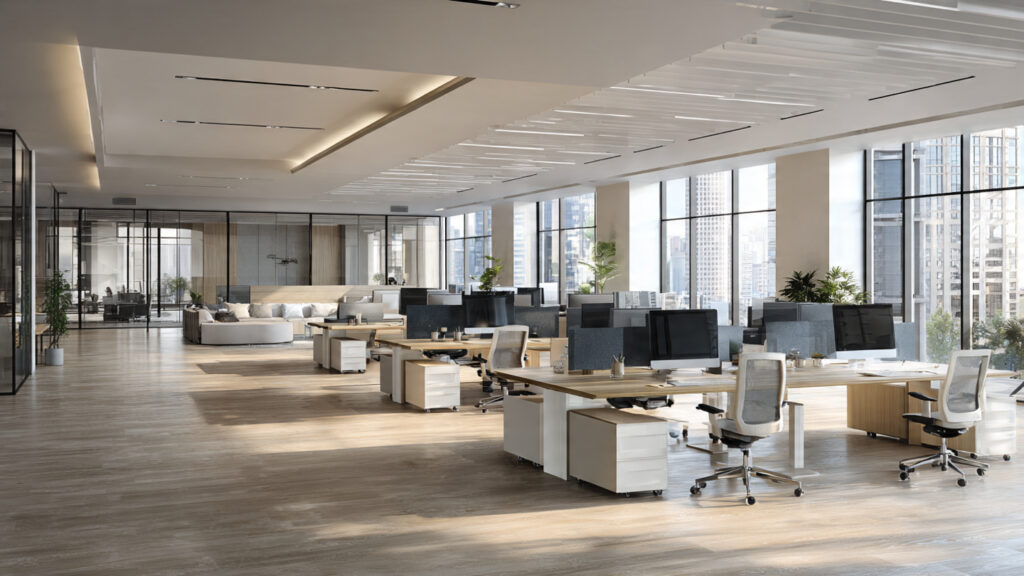
Open-plan office layouts have become a defining feature of modern workplaces because they encourage collaboration, transparency, and flexibility. By reducing physical barriers such as solid walls and enclosed cabins, open layouts allow teams to interact more freely and build stronger communication channels. Natural light flows more easily across the workspace, creating a brighter and more inviting atmosphere. When planned correctly with zoning and furniture placement, open-plan offices can balance teamwork with individual focus, making them suitable for dynamic and fast-growing organizations.
2. Ergonomic Furniture for Employee Comfort
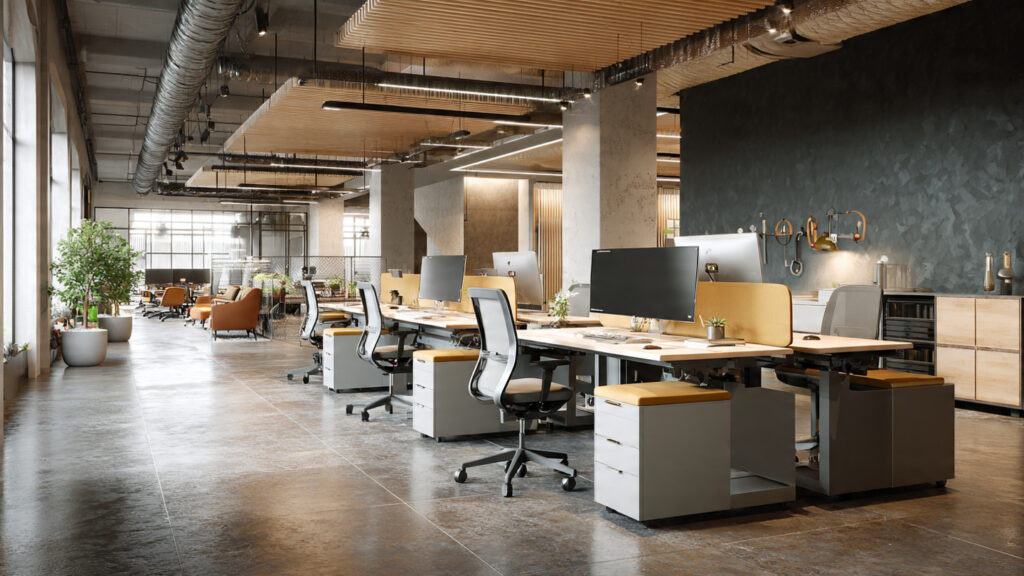
Ergonomic furniture plays a vital role in maintaining employee health and productivity in office interiors. Chairs with lumbar support, adjustable desk heights, and proper workstation alignment help reduce physical strain caused by prolonged sitting. An office interior that prioritizes ergonomics minimizes fatigue, improves posture, and enhances concentration. Over time, ergonomic investments lead to fewer health complaints, reduced absenteeism, and higher overall work efficiency.
3. Neutral Color Palette with Accent Tones

Neutral color schemes form the foundation of modern office interior design by creating calm and professional environments. Shades such as white, beige, grey, and soft earth tones make workspaces feel organized and visually spacious. Accent colors introduced through feature walls, furniture, or décor elements add personality and energy without overwhelming the space. This balanced use of color supports focus while subtly enhancing creativity and brand identity.
4. Maximizing Natural Light

Natural light is one of the most valuable assets in office interior design. Offices that incorporate large windows, glass façades, or open layouts benefit from improved employee mood and productivity. Exposure to daylight helps regulate energy levels and reduces dependence on artificial lighting. Even in compact offices, thoughtful space planning and transparent partitions can distribute available natural light more effectively throughout the workspace.
5. Smart and Layered Lighting Design
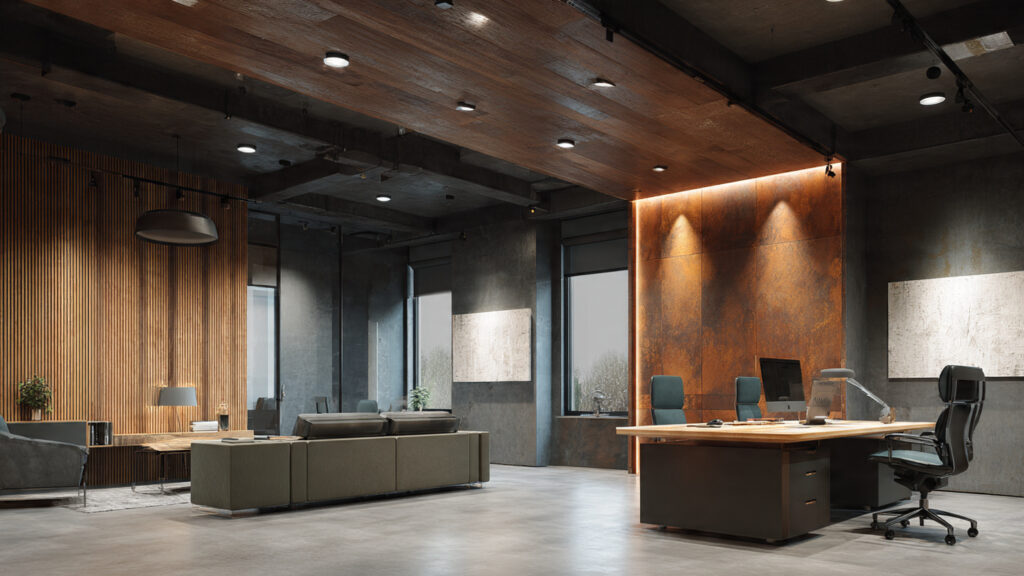
When natural light is limited, smart lighting design becomes essential for maintaining visual comfort and productivity. Layered lighting systems combine ambient lighting for overall illumination, task lighting for focused work areas, and accent lighting to enhance aesthetics. Modern office interiors increasingly use LED lighting solutions with adjustable brightness and color temperature, allowing the workspace to adapt to different tasks and times of day.
6. Indoor Plants and Biophilic Design
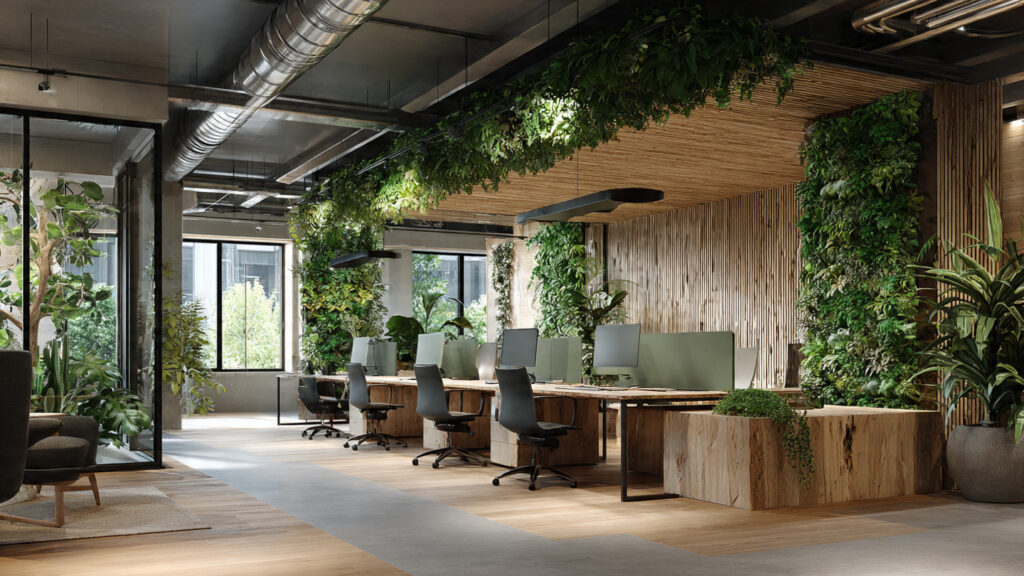
Biophilic design introduces natural elements into office interiors, creating healthier and more engaging work environments. Indoor plants improve air quality, reduce stress, and add warmth to modern office spaces. Greenery softens the structured appearance of corporate interiors and helps employees feel more connected to nature. Even minimal plant integration can significantly enhance the overall atmosphere of an office.
7. Glass Partitions for Openness and Privacy

Glass partitions have become a popular alternative to traditional walls in contemporary office interiors. They maintain openness while providing acoustic and visual separation where needed. Glass walls allow light to pass through the office, making spaces appear larger and more connected. Frosted or tinted glass options offer privacy without sacrificing brightness, making them ideal for meeting rooms and executive cabins.
Dedicated Collaboration and Breakout Areas
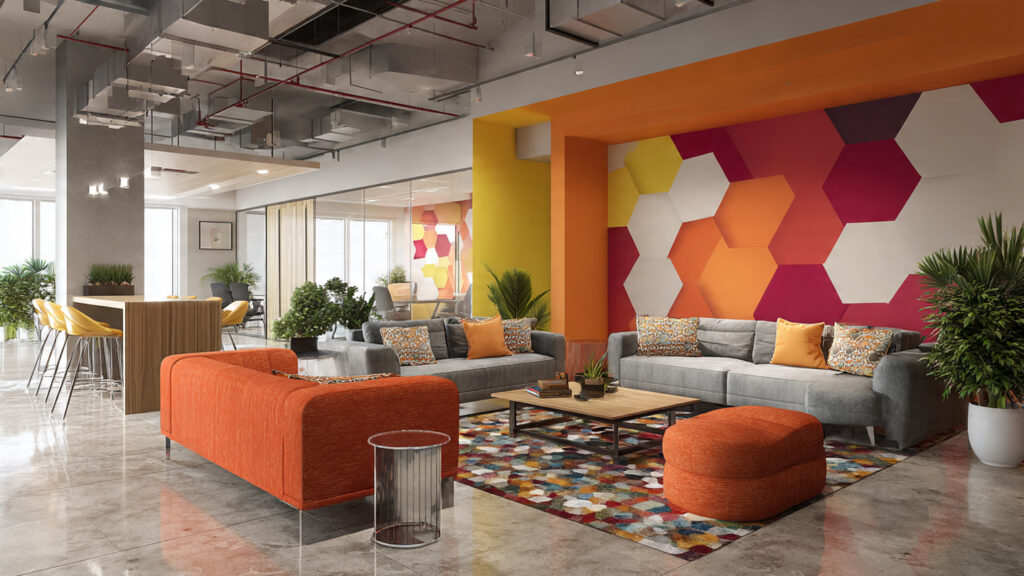
Collaboration zones are essential in modern office interiors as they support teamwork, creativity, and informal communication. These areas provide employees with spaces to brainstorm, discuss ideas, or relax briefly away from their desks. Comfortable seating, flexible layouts, and a relaxed design approach encourage spontaneous interaction and innovation. Well-designed breakout spaces also help reduce stress and improve workplace culture.
9. Acoustic Solutions for Noise Control
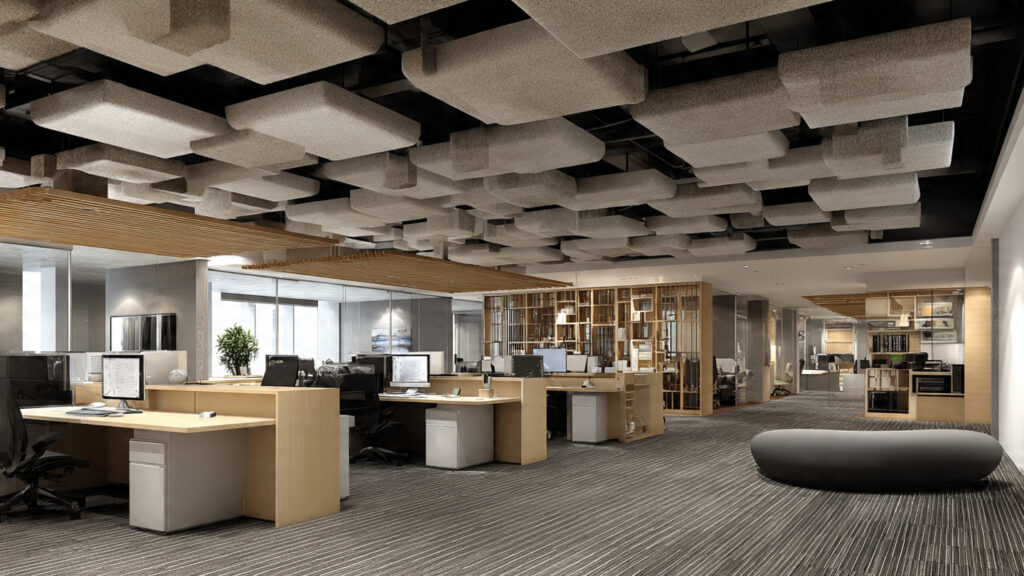
Noise management is a critical challenge in open and shared office layouts. Without proper acoustic treatment, sound distractions can reduce productivity and increase stress levels. Modern office interiors incorporate acoustic panels, carpets, upholstered furniture, and ceiling treatments to absorb sound and minimize echo. These solutions create quieter, more focused environments while preserving the openness of the workspace.
10. Minimalist Office Interior Design

Minimalist office interiors emphasize simplicity, functionality, and clean design. By eliminating unnecessary décor and clutter, minimalist spaces promote mental clarity and efficiency. Clean lines, neutral colors, and purposeful furniture create a professional appearance that is easy to maintain. Minimalist offices are particularly effective for organizations that value focus, organization, and long-term adaptability.
11. Flexible and Modular Furniture Solutions

Office interiors serve as a powerful branding tool that reflects a company’s identity and values. Incorporating brand colors, logos, and visual elements into walls, furniture, and décor strengthens corporate identity. A well-branded office creates a cohesive experience for employees and visitors while reinforcing professionalism and trust. Branding through interior design also fosters a sense of belonging among staff.
12. Smart Storage and Space Optimization
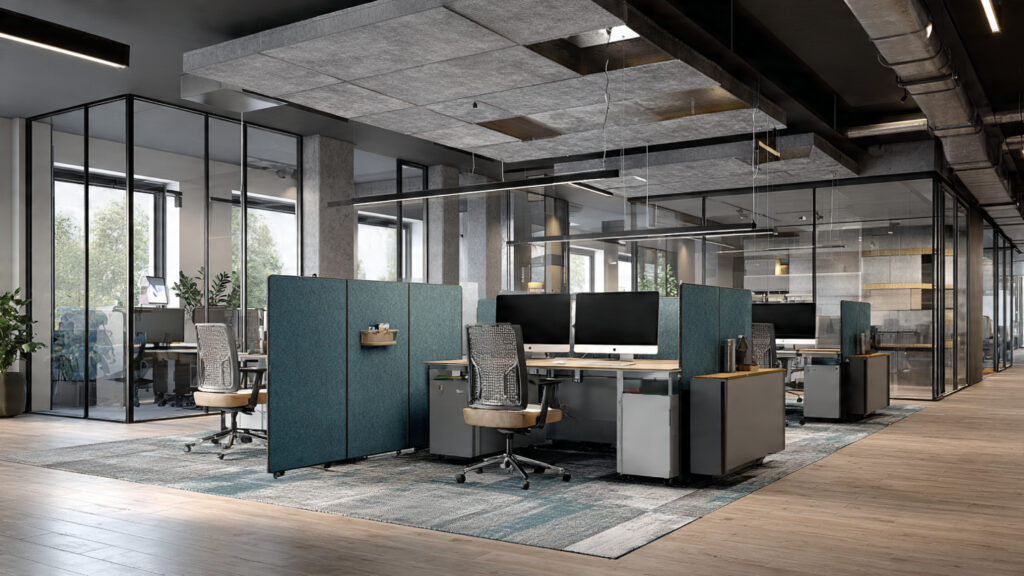
Flexibility is a key requirement in modern office interiors due to changing work patterns and business growth. Modular furniture systems allow spaces to be easily reconfigured for meetings, team expansions, or hybrid work setups. Mobile desks, movable partitions, and adaptable seating arrangements ensure that the office can evolve without extensive renovations, making flexibility a cost-effective design strategy.
13. Flexible and Modular Furniture Solutions
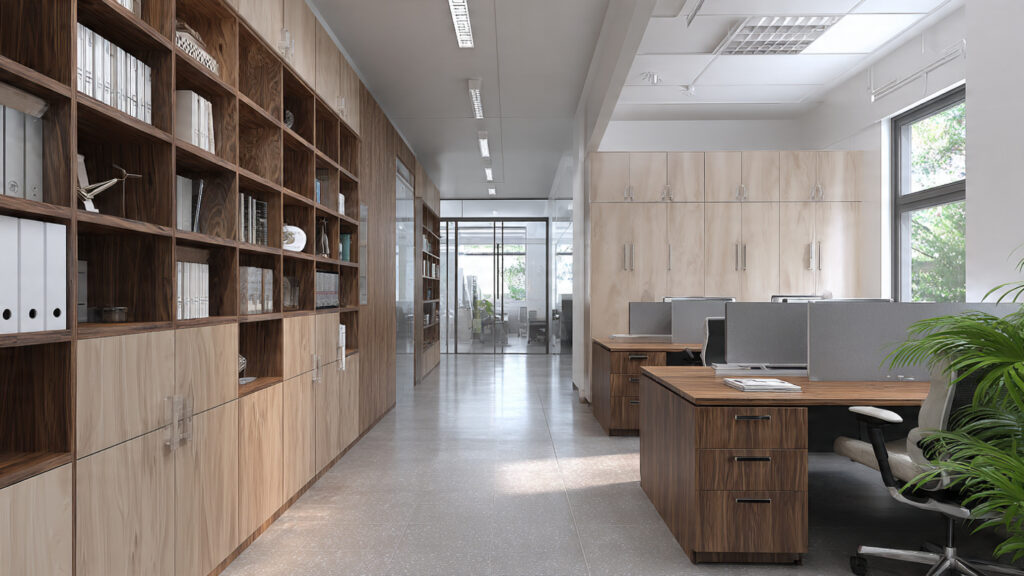
Efficient storage solutions are essential for maintaining organized and clutter-free office interiors. Built-in cabinets, wall-mounted shelves, and concealed storage systems help keep workspaces tidy and functional. Smart storage design improves workflow efficiency by ensuring that essential items are accessible while preserving a clean and professional appearance.
14. Executive Office Interior Design

Executive offices require a refined design approach that reflects leadership, authority, and professionalism. These interiors often feature premium materials, sophisticated furniture, and warm lighting to create an elegant atmosphere. A well-designed executive office balances comfort with status, providing a space suitable for focused decision-making and high-level meetings.
15. Sustainable Office Interior Design
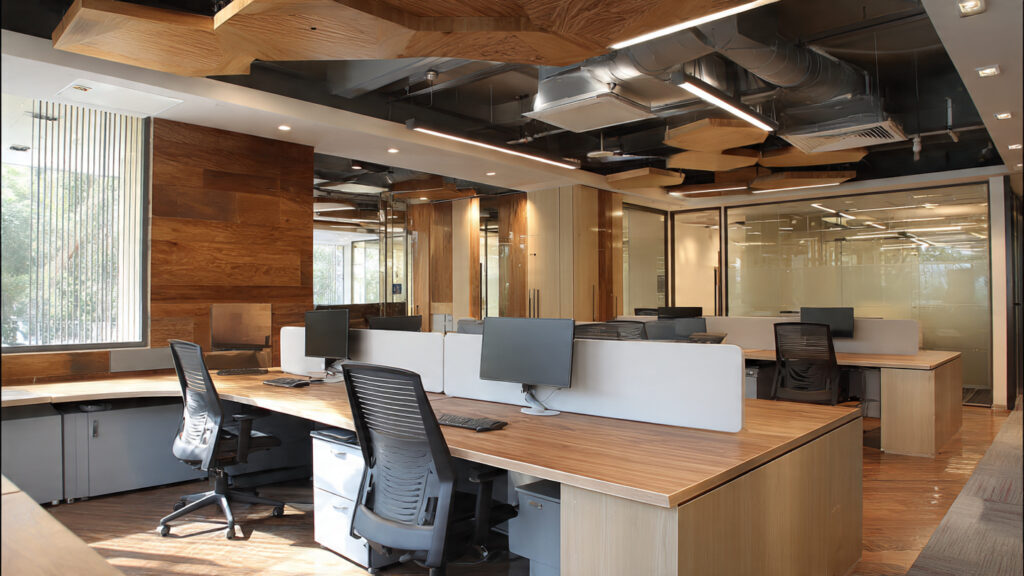
Sustainability is increasingly shaping office interior design decisions as businesses prioritize environmental responsibility. Sustainable offices use eco-friendly materials, energy-efficient lighting, recycled furniture, and low-emission finishes. These design choices reduce environmental impact while creating healthier indoor environments. Sustainable office interiors also enhance brand reputation and support long-term operational savings.
Conclusion
Modern office interior design is a strategic investment that influences productivity, employee satisfaction, and brand perception. By integrating open layouts, ergonomic furniture, intelligent lighting, flexible planning, and sustainable solutions, businesses can create workspaces that support both performance and well-being. A thoughtfully designed office interior is not just about aesthetics—it is about building an environment where people and organizations can thrive.